
Nava Kundathmaka Shatha Chandi Sahitha Rudra Yagam Event
in Deities
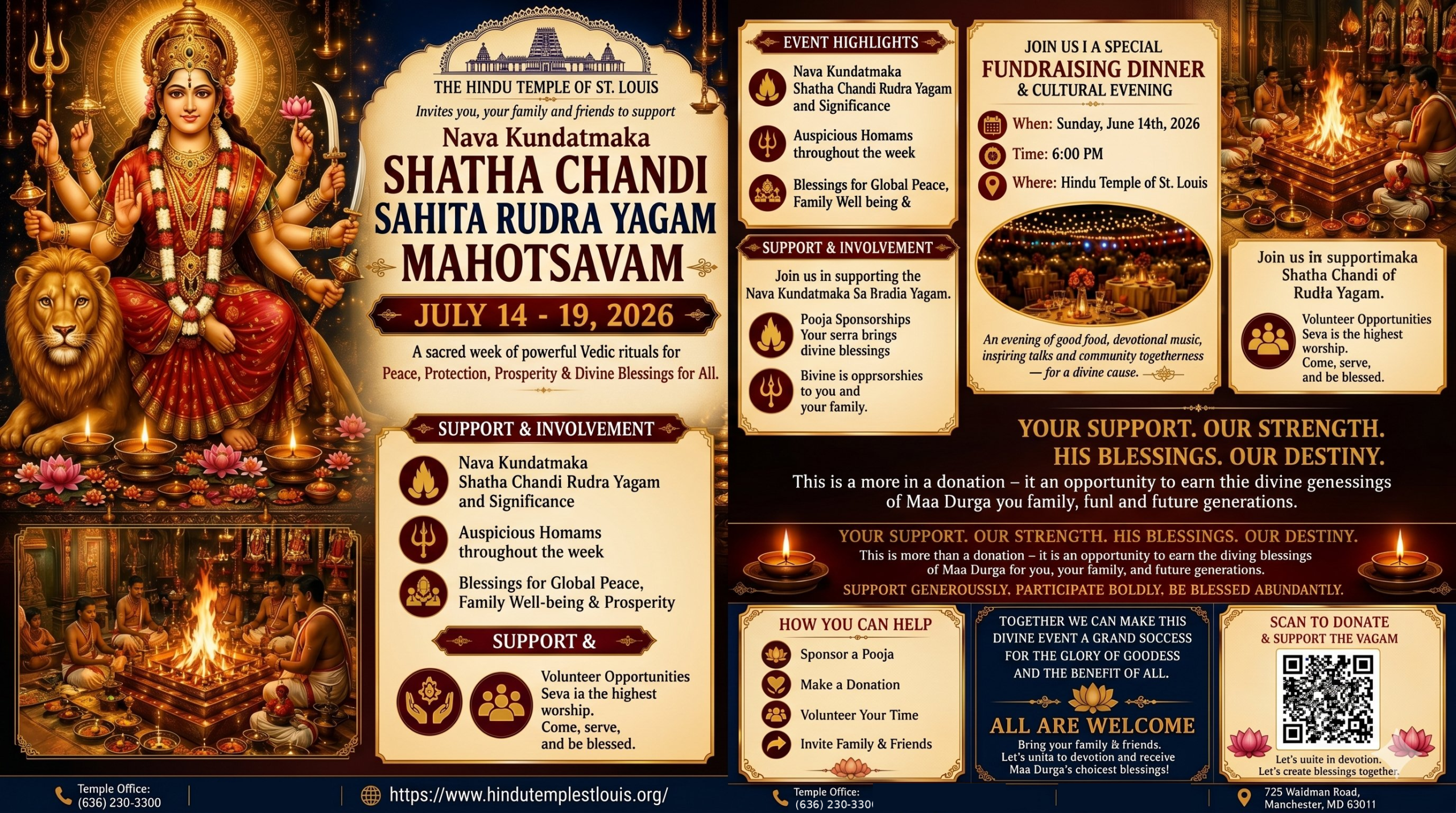
Navakundathmaka Shatha Chandi Sahitha Rudra Yagam
1. Introduction and Spiritual Significance
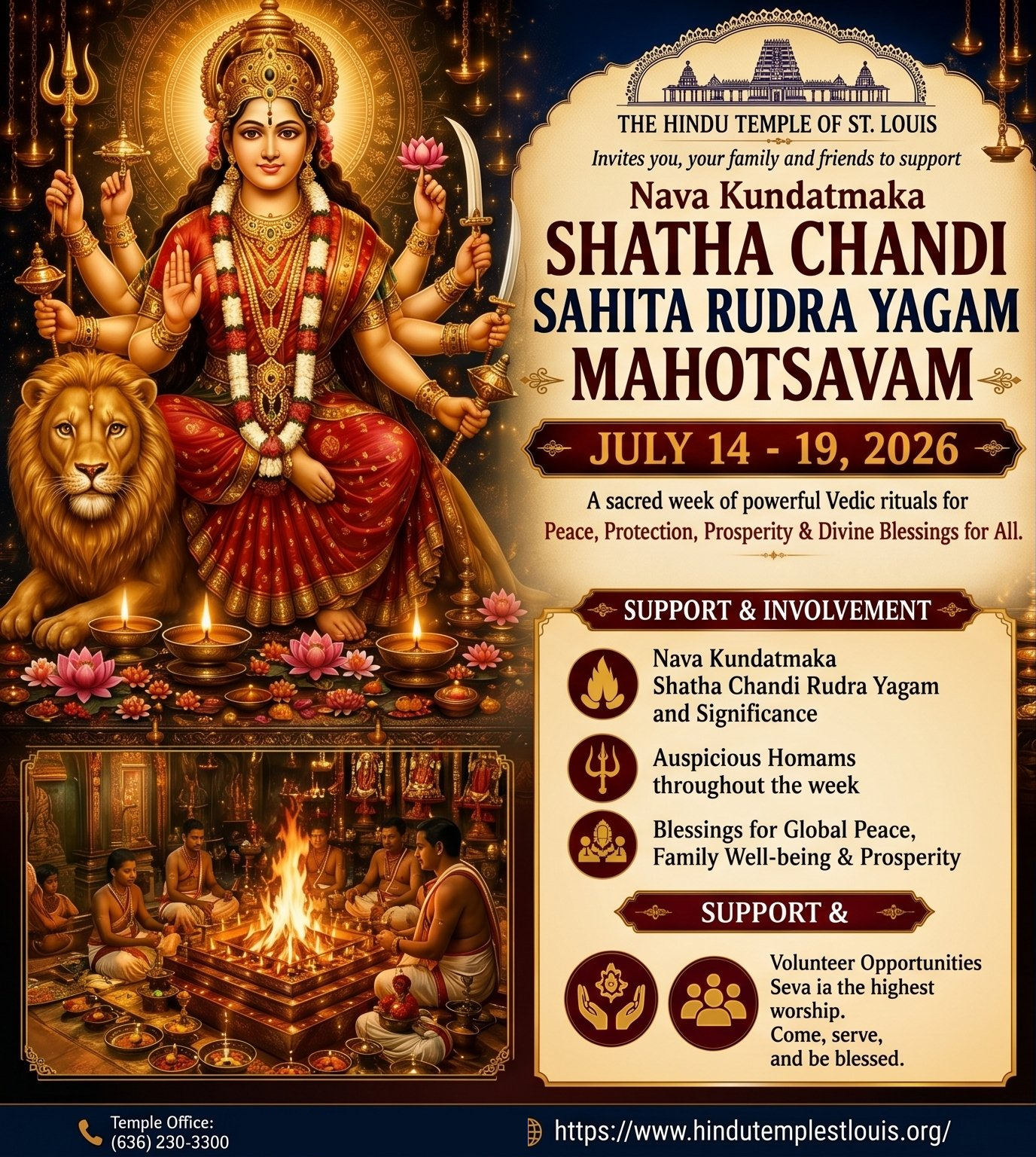
It is with profound reverence and scholarly solemnity that we announce the Navakundathmaka Shatha Chandi Sahitha Rudra Yagam. This momentous spiritual undertaking serves as a grand bridge between the eternal, unchanging wisdom of the Vedic Rishis and the aspirations of our contemporary community. This event is far more than a ritual; it is a meticulous alignment of cosmic forces designed to establish Dharma, provide absolute divine protection, and foster Loka Kalyanam (universal welfare).
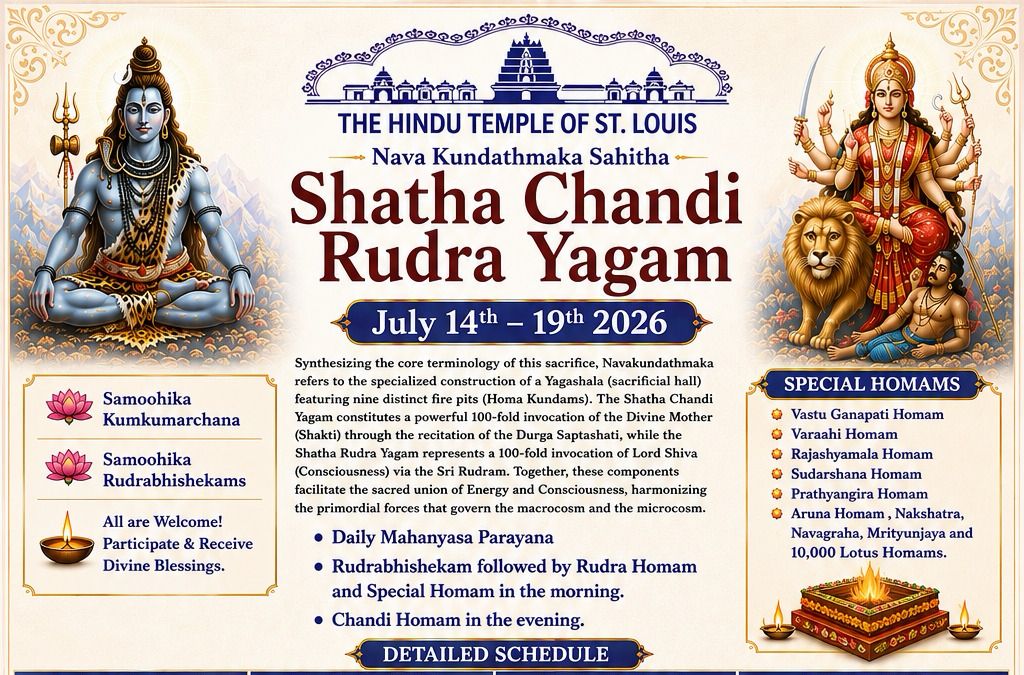
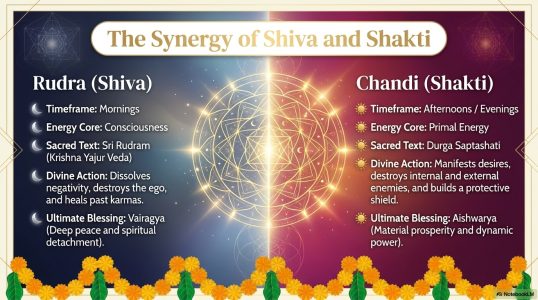
Synthesizing the core terminology of this sacrifice, Navakundathmaka refers to the specialized construction of a Yagashala (sacrificial hall) featuring nine distinct fire pits (Homa Kundams). The Shatha Chandi Yagam constitutes a powerful 100-fold invocation of the Divine Mother (Shakti) through the recitation of the Durga Saptashati, while the Shatha Rudra Yagam represents a 100-fold invocation of Lord Shiva (Consciousness) via the Sri Rudram. Together, these components facilitate the sacred union of Energy and Consciousness, harmonizing the primordial forces that govern the macrocosm and the microcosm.
The Architecture of Divinity: The Nine Sacred Kundas
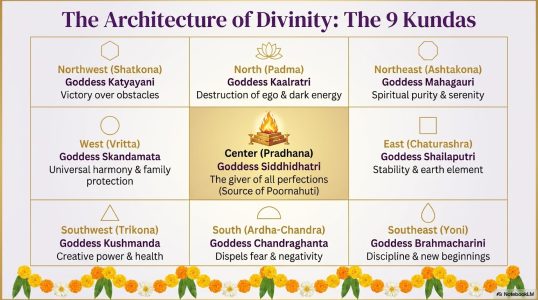
The Yagashala is an architectural microcosm of the universe. According to the Shulba Sutras and Agamic standards, the geometric shapes of the Kundas are not merely decorative; they are precise mathematical instruments and vibrational resonators used to “tune” the environment to specific divine frequencies.
|
Direction
|
Geometric Shape
|
Presiding Nava Durga
|
Specific Spiritual Benefit
|
|---|---|---|---|
|
East (Purva)
|
Chaturashra (Square)
|
Goddess Shailaputri
|
Stability, foundational strength, and earth element alignment.
|
|
Southeast (Agneya)
|
Yoni (Seed-shaped)
|
Goddess Brahmacharini
|
Discipline, the source of creation, and emotional mastery.
|
|
South (Dakshina)
|
Ardha-Chandra (Semi-circle)
|
Goddess Chandraghanta
|
Dispelling fear, neutralizing negativity, and ancestral peace.
|
|
Southwest (Nirriti)
|
Trikona (Triangle)
|
Goddess Kushmanda
|
Creative power, health, and the destruction of karmic obstacles.
|
|
West (Pashchima)
|
Vritta (Circle)
|
Goddess Skandamata
|
Maternal protection, universal harmony, and environmental balance.
|
|
Northwest (Vayu)
|
Shatkona (Hexagon)
|
Goddess Katyayani
|
Victory over external conflicts and sensory control.
|
|
North (Uttara)
|
Padma (Lotus)
|
Goddess Kaalratri
|
Destruction of ego, dark energies, and spiritual purification.
|
|
Northeast (Ishana)
|
Ashtakona (Octagon)
|
Goddess Mahagauri
|
Spiritual purity, serenity, and the grace of Ishana.
|
|
Center (Madhya)
|
Pradhana (Principal)
|
Goddess Siddhidhatri
|
Fulfillment of all spiritual perfections (Siddhis).
|
This geometric and spiritual foundation is translated into a rigorous daily practice over seven days, moving systematically from purification to peak spiritual intensity.
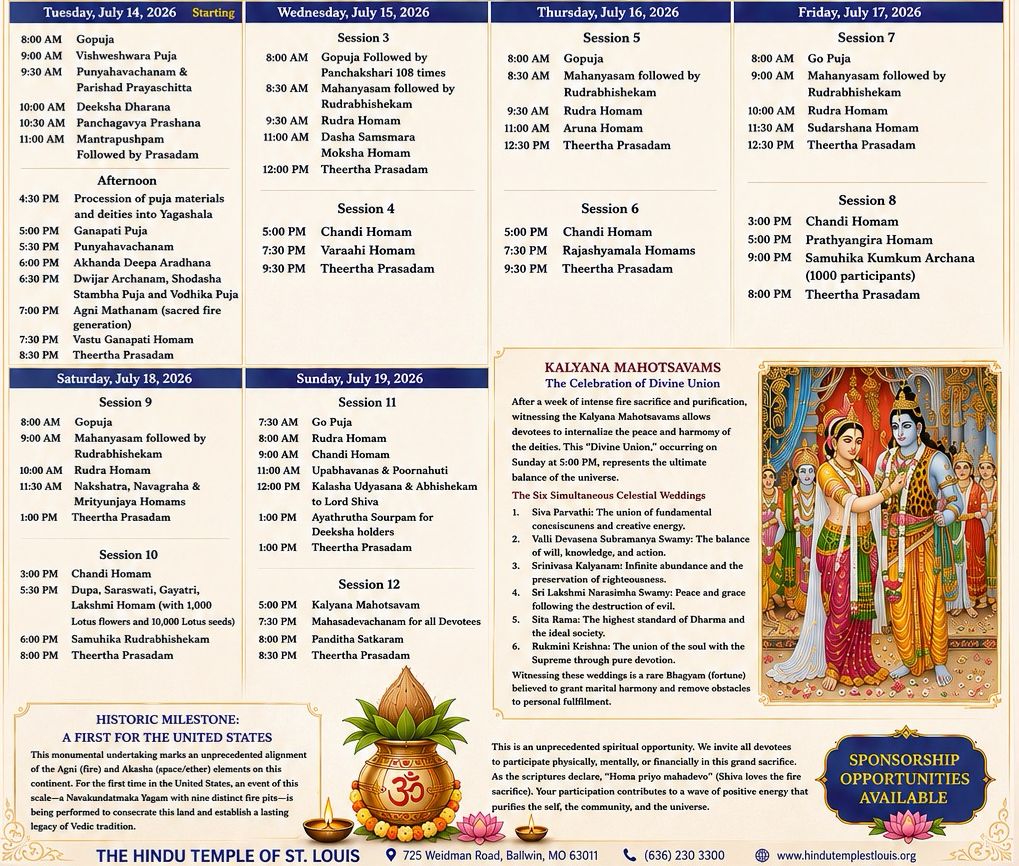
2. Chronological Pooja Schedule (July 14 – July 19, 2026)
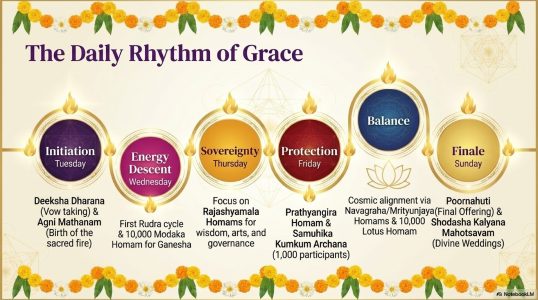
The ritual timeline is strategically engineered to guide participants through a transformative journey of the soul. The schedule initiates with fundamental Shuddhi (purification) and formal Deeksha (initiation), escalating into the peak resonance of the 100-fold invocations where the boundaries between the seeker and the Divine begin to dissolve.
Official Event Timeline
|
Date/Time
|
Ritual Name
|
Location
|
Brief Description
|
|---|---|---|---|
|
Tue, July 14
|
|
|
|
|
8:00 AM
|
Gopuja
|
Temple
|
Ritual worship of the cow for material and spiritual prosperity.
|
|
8:30 AM
|
Mahanyasam
|
Temple
|
Invoking Shiva’s presence within the practitioners’ bodies.
|
|
9:00 AM
|
Vigneshwara Puja
|
Temple
|
Invoking Lord Ganesha to remove all ritual hurdles.
|
|
9:30 AM
|
Punyahavachanam & Parishad Prayaschitta
|
Temple
|
Scriptural cleansing and rites of atonement for the space.
|
|
10:00 AM
|
Deeksha Dharana
|
Temple
|
Formal initiation and vow-taking for all participants.
|
|
10:30 AM
|
Panjagavya Prashanam
|
Temple
|
Internal purification using sacred cow products.
|
|
4:30 PM
|
Procession
|
Yagashala
|
Ceremonial entry of deities and materials into the hall.
|
|
6:00 PM
|
Akhanda Deepa Aradhana
|
Yagashala
|
Lighting the eternal flame to guide divine energies.
|
|
6:30 PM
|
Dwaja Arohanam & Shodasha Stambha Puja
|
Yagashala
|
Hoisting the ritual flag to signal the start of the sacrifice.
|
|
7:00 PM
|
Ankurarpana & Agni Mathanam
|
Yagashala
|
Seed-sowing and generation of sacred fire by wood friction.
|
|
7:30 PM
|
Vastu Ganapati Homam
|
Yagashala
|
Aligning the ritual space with cosmic and environmental laws.
|
|
Wed, July 15
|
|
|
|
|
8:00 AM
|
Gopuja & Panchakshari Chanting
|
Temple
|
108 chants of “Om Namah Shivaya” for alignment.
|
|
9:00 AM
|
Rudra Homam
|
Yagashala
|
Commencement of the Shatha Rudra cycle for world peace.
|
|
11:30 AM
|
Dasha Sahasra Modaka Homam
|
Yagashala
|
Offering 10,000 sweet modakas for community obstacle removal.
|
|
5:00 PM
|
Chandi Homam
|
Yagashala
|
Commencement of the 100-fold Divine Mother cycle.
|
|
7:30 PM
|
Varaahi Homam
|
Yagashala
|
Invoking the commander-goddess for fierce protection.
|
|
Thu, July 16
|
|
|
|
|
9:00 AM
|
Rudra Homam
|
Yagashala
|
Daily morning cycle of Shiva invocation and renewal.
|
|
10:30 AM
|
Dasha Sahasra Modaka Homam
|
Yagashala
|
Continued removal of obstacles and granting of bliss.
|
|
5:00 PM
|
Chandi Homam
|
Yagashala
|
Ongoing 100-fold Durga Saptashati invocations.
|
|
7:30 PM
|
Rajashyamala Homams
|
Yagashala
|
Rituals for leadership, arts, and mastery of speech.
|
|
Fri, July 17
|
|
|
|
|
9:00 AM
|
Aruna Homam
|
Yagashala
|
Ritual solar worship for physical vitality and Arogyam.
|
|
10:00 AM
|
Rudra Homam
|
Yagashala
|
Morning Shiva cycle focused on ego dissolution.
|
|
11:30 AM
|
Sudarshana Homam
|
Yagashala
|
Invoking the divine discus to shield against negativity.
|
|
5:30 PM
|
Prathyangira Homam
|
Yagashala
|
A fierce ritual to neutralize extreme psychological threats.
|
|
6:00 PM
|
Samuhika Kumkum Archana
|
Yagashala
|
Collective vermilion offering for family well-being.
|
|
Sat, July 18
|
|
|
|
|
11:30 AM
|
Nakshatra & Mrityunjaya Homams
|
Yagashala
|
Aligning planetary destinies and seeking longevity.
|
|
5:30 PM
|
10,000 Lotus Homam
|
Yagashala
|
Extraordinary offering for total spiritual illumination.
|
|
6:30 PM
|
Samuhika Rudrabhishekam
|
Yagashala
|
Collective ritual bathing of the Shiva Lingam for healing.
|
|
Sun, July 19
|
|
|
|
|
8:30 AM
|
Rudra Homam
|
Yagashala
|
The final morning invocation of the Rudra cycle.
|
|
11:30 AM
|
Poornahuti
|
Yagashala
|
The final offering signifying ritual completion.
|
|
12:00 PM
|
Kalasha Udvasana & Prana-Prathistha
|
Yagashala
|
Transferring gathered energy back to the temple deities.
|
|
1:00 PM
|
Avabhruta Snanam
|
Yagashala
|
The concluding ritual bath for the Deeksha holders.
|
|
5:00 PM
|
Shodasha Kalyana Mahotsavam
|
CEC*
|
Celestial wedding of six divine couples simultaneously.
|
|
8:00 PM
|
Panditha Sathkaram
|
CEC*
|
Honoring the Vedic scholars for their sacred service.
|
*Note: CEC refers to the Temple’s Cultural and Education Center.
The daily flow ensures that participants are grounded in purification before experiencing the specialized blessings of the auxiliary rituals.
3. Special Pooja Events: Insights and Blessings
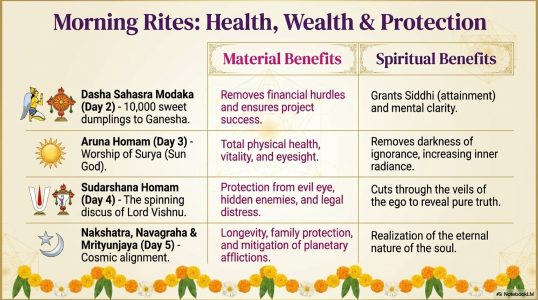
These specialized Homams address the “So What?” factors of contemporary life—the unique karmic challenges, psychological shadows, and environmental stressors faced by individuals in the modern age.
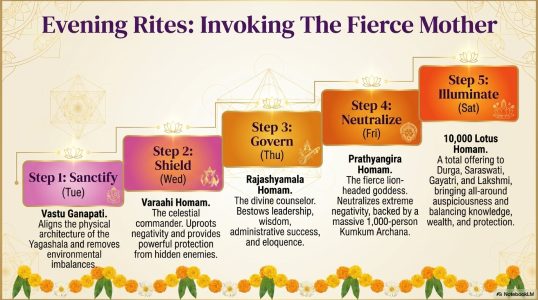
Vastu Ganapati Homam
- Significance: Addresses the master of physical environment and architectural balance.
- Benefits: Removes Vastu Doshas (environmental imbalances) from the home, ensuring that the physical space supports spiritual growth.
Varaahi Homam
- Significance: Dedicated to the commander-goddess of the Divine Mother’s army.
- Benefits: Acts as a spiritual shield against hidden enemies and legal hurdles, while uprooting the internal weaknesses of fear and procrastination.
Rajashyamala Homam
- Significance: Focuses on the power of governance, arts, and mastery of the intellect.
- Benefits: Bestows leadership qualities, administrative success, and the Vak-Siddhi (mastery of speech) required to influence the world positively.
Sudarshana Homam
- Significance: Invocation of the celestial spinning discus of Lord Vishnu, the “Vision of the Auspicious.”
- Benefits: Severs ties with negative astral influences and “evil eye,” providing mental clarity by cutting through the veils of ego.
Prathyangira Homam
- Significance: One of the most powerful protection rites found in the Atharva Veda, invoking the lion-headed manifestation of Shakti.
- Benefits: Specifically designed to neutralize extreme negativity and black magic. Crucially, it serves to dismantle deep-seated psychological barriers and internal shadows that impede self-realization.
Aruna Homam
- Significance: Worship of the Sun God (Surya) through the Aruna Prashna, connecting to the solar energy that sustains life.
- Benefits: Promotes Arogyam (total physical health), improved vitality, and the removal of the darkness of ignorance.
10,000 Lotus Homam
- Significance: An extraordinary offering to Durga, Saraswati, Gayatri, and Lakshmi using 10,000 lotus flowers, symbolizing the unfolding of the soul.
- Benefits: Achieves Sarva-Mangalam (total auspiciousness) and creates a balance between wealth, knowledge, and protection.
These individual offerings prepare the collective consciousness to receive the massive energy generated by the convergence of the two main Yagams.
4. The Core Convergence: Shatha Chandi & Shatha Rudra Yagam
The true potency of this event lies in the synergy between Shiva and Shakti. The schedule creates a rhythmic spiritual alignment: the morning sessions focus on Consciousness (Rudra), while the afternoon sessions focus on Energy (Chandi). This creates a complete cycle of dissolution of the old and the manifestation of the divine.
The Power of Shatha Chandi
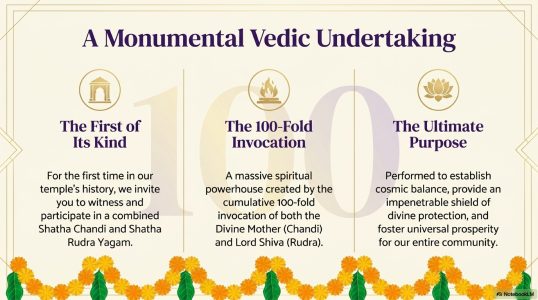
The 100-fold scale of this Yagam is a landmark spiritual achievement. By reciting the Durga Saptashati 100 times, the priests invoke the nine forms of the Mother to neutralize negative karmic influences on a regional scale, establishing an unprecedented shield of divine protection over all participants.
The Grace of Shatha Rudra
Rooted in the Sri Rudram of the Krishna Yajur Veda, the Shatha Rudra Yagam utilizes the preparatory power of Mahanyasam. By invoking Shiva’s presence into their own bodies, the practitioners become pure vessels for grace, chanting for universal peace and the removal of the ego.
The Dual Benefits of Participation:
- Vairagya (Detachment and Peace): Derived from the Shiva energy, providing mental clarity and emotional healing.
- Aishwarya (Prosperity and Power): Derived from the Shakti energy, facilitating the fulfillment of righteous desires.
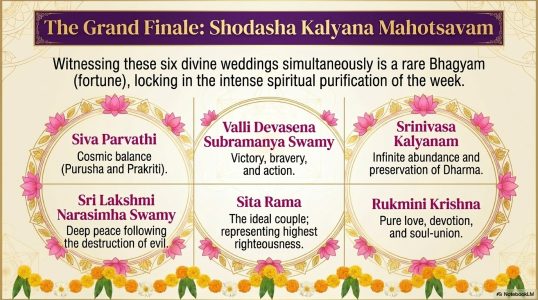
5. Shodasha Kalyana Mahotsavam: The Celestial Union
After a week of intense fire sacrifice and purification, witnessing the Shodasha Kalyana Mahotsavam allows devotees to internalize the peace and harmony of the deities. This “Divine Union,” occurring on Sunday at 5:00 PM, represents the ultimate balance of the universe.
The Six Simultaneous Celestial Weddings
- Siva Parvathi: The union of fundamental consciousness and creative energy.
- Valli Devasena Subramanya Swamy: The balance of will, knowledge, and action.
- Srinivasa Kalyanam: Infinite abundance and the preservation of righteousness.
- Sri Lakshmi Narasimha Swamy: Peace and grace following the destruction of evil.
- Sita Rama: The highest standard of Dharma and the ideal society.
- Rukmini Krishna: The union of the soul with the Supreme through pure devotion.
Witnessing these weddings is a rare Bhagyam (fortune) believed to grant marital harmony and remove obstacles to personal fulfillment.
6. Historic Milestone: A First for the United States
“This monumental undertaking marks an unprecedented alignment of the Agni (fire) and Akasha (space/ether) elements on this continent. For the first time in the United States, an event of this scale—a Navakundatmaka Yagam with nine distinct fire pits—is being performed to consecrate this land and establish a lasting legacy of Vedic tradition.”
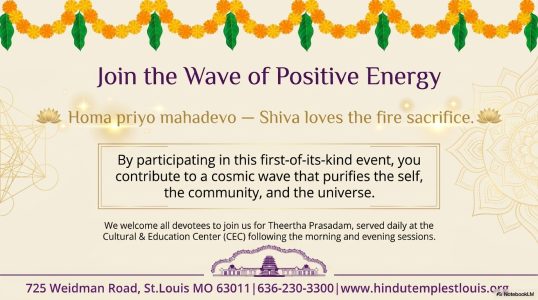
This is an unprecedented spiritual opportunity. We invite all devotees to participate physically, mentally, or financially in this grand sacrifice. As the scriptures declare, “Homa priyo mahadevo” (Shiva loves the fire sacrifice). Your participation contributes to a wave of positive energy that purifies the self, the community, and the universe.
7. Support, Collaboration, and Participation Guidelines
The success of this monumental effort relies on the collective Seva (service) and Sankalpa (intention) of our community.
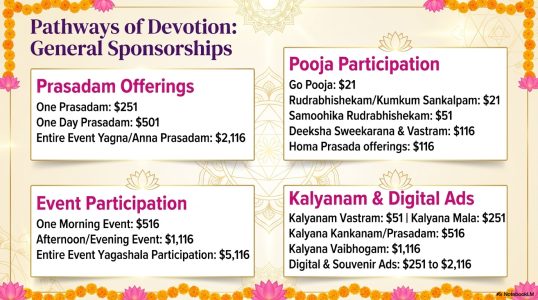
Sponsorship Opportunities
- Grand Sponsorships: Families may support the significant requirements of the 100-fold rituals.
- Individual Sankalpas: Opportunities are available for specific intentions for the Dasha Sahasra Modaka and 10,000 Lotus rituals.
Volunteer Seva
- Annadanam: Assisting with the daily food service for devotees and scholars.
- Crowd Management: Ensuring the smooth flow of participants during the Kumkum Archana.
- Yagashala Preparation: Assisting with the sacred materials and upkeep of the sacrificial hall.
Devotee Guidelines
- Attendance: All are welcome to witness the sessions. The sound vibrations of the Sri Rudram and Durga Saptashati are potent just to hear.
- Theertha Prasadam: Served daily at the Cultural and Education Center (CEC) following the morning and evening sessions.
- Personal Information: Devotees participating in collective rituals must provide their Janma Nakshatra (birth star) for the collective Sankalpa.
May this grand Yagam bring Loka Kalyanam and shower blessings of peace, health, and prosperity upon all.