
Ayyappa Mandalam 2026
- Description
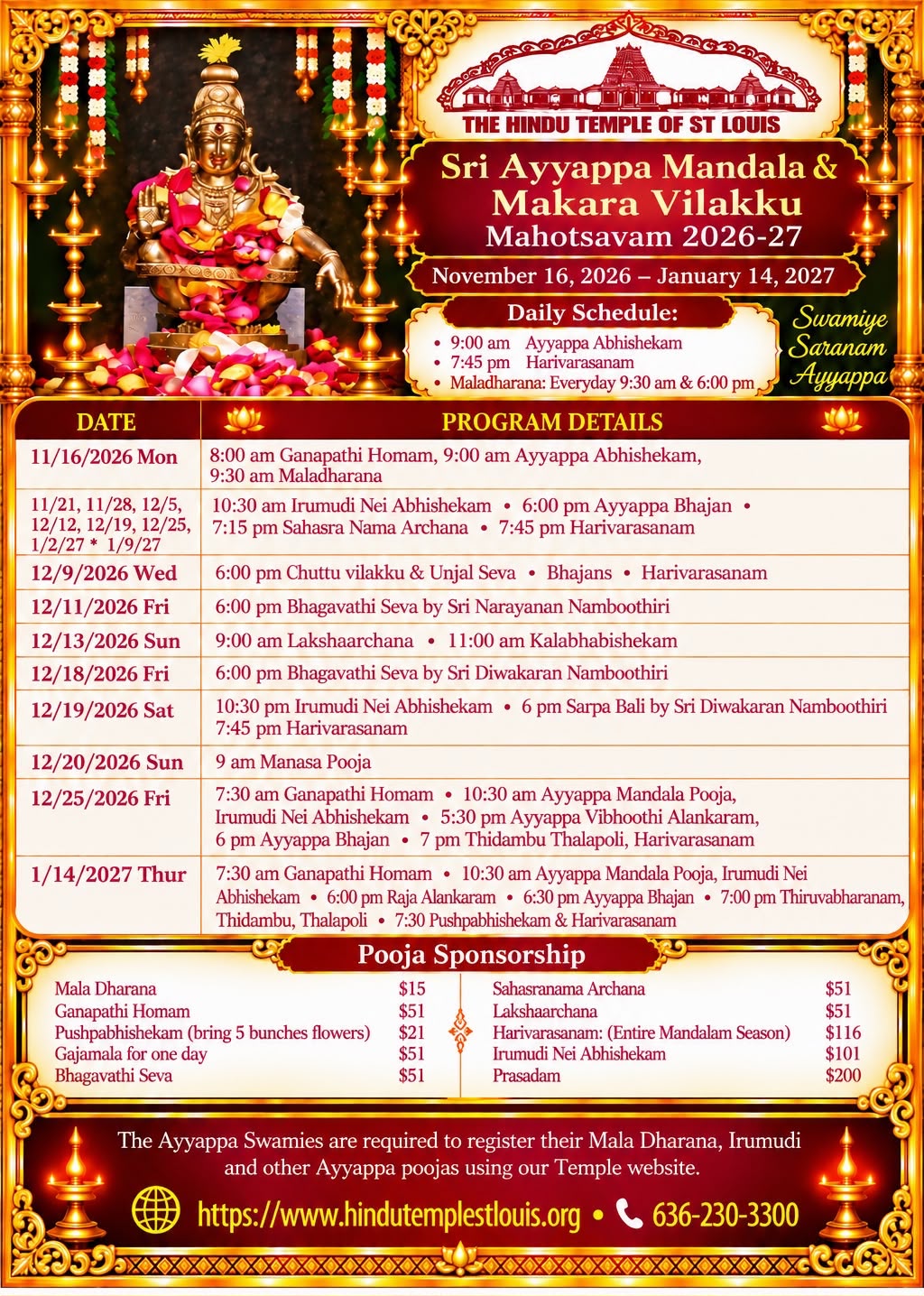
Sri Ayyappa Mandala & Makara Vilakku Mahotsavam 2026–27
Irumudi Nei Abhishekam Schedule
The Hindu Temple of St. Louis invites all devotees to participate in the sacred Irumudi Nei Abhishekam during the Sri Ayyappa Mandala & Makara Vilakku Mahotsavam, running from November 16, 2026 through January 14, 2027.
Scheduled Dates & Times
November 2026:
Saturday, Nov 21: 10:30 AM
Saturday, Nov 28: 10:30 AM
December 2026:
Saturday, Dec 5: 10:30 AM
Saturday, Dec 12: 10:30 AM
Saturday, Dec 19: 10:30 AM and 10:30 PM
Friday, Dec 25 (Ayyappa Mandala Pooja): 10:30 AM
January 2027:
Saturday, Jan 2: 10:30 AM
Saturday, Jan 9: 10:30 AM
Thursday, Jan 14 (Makara Vilakku / Mandala Pooja): 10:30 AM
Note for Devotees: If devotees wish to perform Irumudi Nei Abhishekam on dates other than those listed above, please reach out to the temple management ahead of time to make the necessary arrangements.
🌟 Special Events Announcement
Sunday, December 13, 2026
9:00 AM: Lakshaarchana
11:00 AM: Kalabhabhishekam
Weekend Special Events (December 18 – 20, 2026)
Friday, Dec 18:
6:00 PM: Bhagavathi Seva by Sri Diwakaran Namboothiri
Saturday, Dec 19:
6:00 PM: Sarpa Bali by Sri Diwakaran Namboothiri
7:45 PM: Harivarasanam
10:30 PM: Special Night Irumudi Nei Abhishekam
Sunday, Dec 20:
9:00 AM: Manasa Pooja
Devotee Guidelines & Registration
- Mandatory Prior Registration: All Ayyappa Swamies are required to register their Mala Dharana, Irumudi, and other Ayyappa poojas online prior to attending.
Contact & Online Registration
Website: https://www.hindutemplestlouis.org
Phone: 636-230-3300------------------------------------
The Hindu Temple of St. Louis
FAQs - Guidelines for Ayyappa Swamies (Devotees) Observing Deeksha and Offering Irumudi to Lord Ayyappa
Swamy Saranam
What is the ultimate goal of observing the Deeksha?
The ultimate goal is purification of the mind, body, and soul to make the devotee worthy of Lord Ayyappa's darshan. It is a practice of extreme self-discipline (including celibacy and clean living) to conquer lust, anger, greed, attachment, pride, and jealousy).
How does one formally begin the Deeksha?
The Deeksha begins when a Guruswamy (spiritual guide) or a temple priest (our Namboothiri offers Deeksha initiation) initiates the devotee by sanctifying and bestowing the Thulasimala (sacred bead garland with the Ayyappa pendant), administering an oath of spiritual discipline.
- How many days the Deeksha is observed?
The traditional period is 41 days (one Mandalam), considered the ideal time for complete cleansing and spiritual transformation. Our Temple recommends a minimum of 14 days for those unable to undertake the full period. According to experienced Swamies, it typically takes about a week or so to fully immerse in the spiritual focus of the Deeksha.
What are the key rules and observances during the Deeksha?
Swamies must follow a strict code of conduct focused on discipline and purity:
- Practice simple living and absolute celibacy.
- Maintain cleanliness of mind and body.
- Completely abstain from alcohol, tobacco, and non-vegetarian food.
- Pray daily (morning and evening) after a bath.
- Chant the mantra "Swamiye Saranam Ayyappa" during the pooja time morning and evening after taking a bath. The number of saranams does not matter. Every saranam should represent your intimate relationship with Ayyappa.
- Show utmost respect to all, especially other Swamiess, mathas, elders.
- Control negative behaviors such as desire, anger, avarice, lust, pride, jealousy, and boastfulness and also focus on Ayyappa through your five senses (principles of holy 18 steps)
What is the recommended dress code during the Vratham period?
The recommended dress is black dhoties (blue is also fine) for male devotees (Swamies) and black sarees or appropriate black dresses for female devotees (Malikapurams). Wear the dhothies during the pooja time, attending Temple poojas or any spiritual events. Wear normal clothes for work or other non-pooja visits.
What are the procedures for taking and offering Irumudi to Ayyappa?
Upon completing the Vratham, the Guruswamy performs Irumudi Pooja and guides the filling of the Irumudi (sacred bundle) with ghee and other offerings—a ritual called Kattu Niraithal. The ghee is filled into a coconut (muthirai thengai) while devotees chant "Swamiye Swamiye" and sing bhajans. Filling the ghee symbolizes offering our Soul to heart. It is the time to fully experience the fruits of Deeksha. The tied Irumudi needs to be taken without utmost devotion.
How to perform the Yatra to Ayyappa Sannidhanam once the Irumudi is prepared?
Swamies carry the Irumudi on their heads, circle the temple three times, and then climb the sacred Eighteen Steps. The steps are reserved only for those carrying the Irumudi, maintaining their sacredness.
What are the procedures to be followed to offer Nei (ghee) from Irumudi for Abishekam?
The ghee from the coconut is used for the Irumudi Abishekam, performed by our Namboothiri, in Sabarimala format. Devotees participate in bhajans and chanting. After the pooja, Swamies drop the empty coconut shells into the Agni Kundam to symbolize offering their all the karmas or negative things.
When and where will prasadam (mainly Abhishekam) be offered?
Swamies receive the prasadam (blessed offerings) from the Guruswamy at the Irumudi Pooja place, which officially concludes the yatra.
How does the Deeksha (Vratham) complete?
The Vratham culminates the day after the Ayyappa darshan with Irumudi. The Swamy removes the mala under the guidance of the Guruswamy or priest, completing the Vratham. Follow the learnings for the entire year.
Swamy Saranam